
Wildfire Resilience for Real Estate: What Every Developer and Property Owner Should Know
Insights, analysis, and expertise on wildfire risk management, climate science, and emergency preparedness.
Wildfire Resilience for Real Estate: What Every Developer and Property Owner Should Know
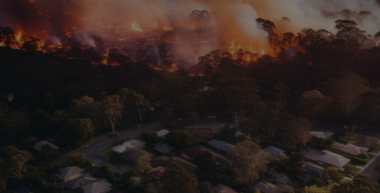
Wildfires are no longer just an environmental concern — they are a real estate risk. Across Canada and beyond, rising temperatures and prolonged drought seasons have created conditions where a single ignition can threaten entire neighborhoods, developments, and portfolios. For developers, investors, and property owners, wildfire resilience is rapidly becoming a defining factor in both project success and long-term asset value.
The reality is stark: a property’s exposure to wildfire is now as financially significant as its location, design, or zoning. Understanding this new landscape is not just a matter of compliance — it’s a matter of protecting equity, credibility, and community trust.
The Rising Risk: Wildfire as a Real Estate Issue
For years, wildfire was viewed as a distant, seasonal hazard. Today, it’s a recurring economic challenge that’s altering the fundamentals of property development and insurance. In regions like British Columbia, Alberta, and parts of Ontario, wildfire seasons are longer, more intense, and more unpredictable than ever before.
Insurers are responding accordingly. Some markets have begun reassessing or withdrawing coverage in high-risk areas, while others impose higher premiums and stricter requirements. This shift doesn’t just impact individual property owners — it affects the entire value chain, from financing and permitting to resale and reputation.
For developers, these pressures demand a new mindset: resilience isn’t a feature; it’s a necessity built into every stage of design and planning.
Why Developers and Investors Can’t Ignore Wildfire Resilience
Wildfire risk now directly influences key real estate metrics — from capital access to asset valuation.
- • Financing and insurance access: Lenders and insurers are incorporating climate and wildfire data into risk assessments. Properties lacking resilience measures may face unfavorable terms or even disqualification.
- • Market perception and resale value: Buyers are becoming increasingly risk-aware. Properties in regions with visible resilience strategies (such as FireSmart landscaping or defensible zones) demonstrate stronger long-term appeal.
- • Operational continuity: Commercial and multi-unit residential properties face major disruption from evacuations, smoke infiltration, and damage. Preventive resilience reduces downtime and recovery costs.
The implication is clear: developers who integrate resilience early gain a competitive advantage in both safety and marketability.
Designing for Wildfire Resilience: Where Real Estate Meets Safety Engineering
Resilience begins with design. Whether planning a rural subdivision or an urban fringe development, wildfire risk can be managed through thoughtful layout, material selection, and vegetation management.
Site Planning and Defensible Space
Good design starts with distance. Properties built with adequate spacing between structures, low-flammability vegetation, and cleared buffer zones are significantly less likely to ignite. Creating defensible zones around buildings — typically a 10–30 metre perimeter — allows firefighters room to work and reduces flame spread.
Fire-Resistant Materials and Envelopes
Choosing the right building materials can mean the difference between a close call and a total loss. Class-A roofing materials, fiber-cement siding, tempered glass, and non-combustible decks all contribute to a structure’s fire resistance. Developers are now pairing these materials with architectural details that limit ember intrusion — such as screened vents and sealed soffits.
Landscaping and Infrastructure Design
Wildfire-smart landscaping isn’t about aesthetics alone. It’s about slowing fire progression. Non-resinous, well-watered plants, gravel pathways, and irrigated green spaces all reduce ignition potential.
At the community level, underground utilities, accessible hydrants, and looped road systems can vastly improve emergency response times.
These measures, once considered optional, are increasingly seen as baseline expectations in fire-prone zones.
Technology: The New Layer of Property Protection
Physical resilience is essential, but digital intelligence is now the force multiplier. The next generation of wildfire protection is data-driven — powered by sensors, satellite imagery, predictive modeling, and real-time communication tools.
Predictive Analytics
AI-driven models can forecast ignition probability based on temperature, humidity, vegetation density, and wind behavior. For developers managing multiple sites, this insight allows for targeted resource allocation and informed decision-making before an incident occurs.
Early Detection Systems
Advanced monitoring networks can identify smoke or heat anomalies in their earliest stages. Drones and camera-based detection tools, when connected to centralized dashboards, reduce false alarms and speed up response times.
Integrated Resilience Dashboards
Platforms like those developed by ResilienceHQ connect data from multiple sources — environmental, structural, and operational — into a single, intuitive interface. Developers and property managers can track risk scores, receive alerts, and visualize threats in real time. This isn’t just technology for crisis response — it’s technology for prevention, planning, and long-term decision confidence.
The Business Case for Building Resilience
At first glance, integrating fire-resilient design and monitoring tools may seem like an additional cost. But resilience is increasingly proving itself as a high-return investment.
Lower long-term risk and insurance costs
Resilient properties face fewer claims, faster recovery times, and more favorable insurance terms — benefits that compound over time.
Competitive differentiation
In a market where climate risk is shaping buyer perception, demonstrating proactive resilience gives properties a measurable edge. Investors, lenders, and municipalities are more likely to back projects that align with sustainability and safety standards.
ESG and reputation alignment
For institutional investors and developers, resilience supports environmental, social, and governance (ESG) goals. Demonstrating reduced environmental impact and community protection enhances corporate credibility.
Resilience is, in short, an economic strategy — not a cost center. It preserves capital, protects brand reputation, and builds trust with regulators and buyers alike.
The Future of Fire-Ready Real Estate
As wildfire seasons intensify and public awareness grows, the real estate industry stands at a crossroads. Properties that adapt will not only endure but outperform. Those that fail to evolve may face escalating costs, shrinking coverage, and declining value.
The next era of development will belong to those who integrate resilience as infrastructure — embedding data intelligence, FireSmart design, and proactive monitoring into the DNA of every project.
At ResilienceHQ, our mission is to make this transformation accessible. By turning wildfire intelligence into actionable insights, we empower developers, property managers, and investors to anticipate risks before they ignite — safeguarding both communities and capital.
Because in the future of real estate, resilience isn’t a choice. It’s the new foundation of value.
Because the best time to build resilience was yesterday. The second best time is now.
📌 Sources: Institute for Catastrophic Loss Reduction (ICLR); Government of Canada – Human Health Effects of Wildfire Smoke (2024); Insurance Business Canada (2024).